
If you’re wondering how to start a budget for the first time, you’re not alone. The good news? Budgeting doesn’t have to be complicated. In fact, the simplest budgets are usually the ones people stick to. Learning how to start a budget is the first step toward taking control of your money.
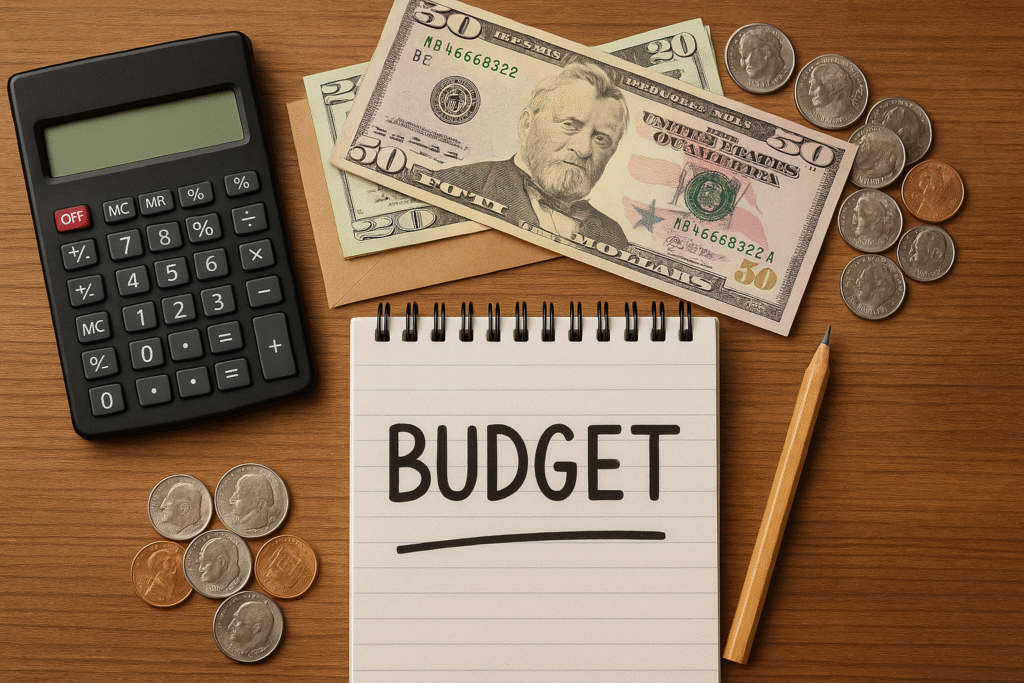
This guide walks you through a clean, beginner-friendly process that helps you understand your money, build confidence, and start seeing results fast.
How to Start a Budget: Know Your Take-Home Income
Understanding how to start a budget begins with knowing exactly what your real take-home pay is each month.
Before you can create a budget, you need to know exactly how much money you take home each month.
- Take-home income = your paycheck after taxes, benefits, and deductions.
- This is the number your budget should be based on — not your salary or hourly rate.
If your income fluctuates, take an average of the last 3 months.
1. List Your Non-Negotiable Bills
These are the expenses you must pay every month, no matter what. Examples:
- Rent or mortgage
- Utilities
- Car payment
- Insurance
- Minimum credit card or loan payments
- Phone bill
- Internet
Add these up — this number forms the base of your budget.
2. Track Your Spending for 30 Days
To build a realistic budget, you need to know where your money is actually going.
You can track your spending:
- Manually, using a notebook or spreadsheet
- Automatically, using free apps like Mint or Simplifi
- With bank and credit card statements, reviewing the last 30 days
This step helps you identify patterns and categories you may not have noticed.
3. Choose a Simple Budgeting Method
Beginner budgets work best when they’re simple. Start with one of these:
• The 50/30/20 Rule
- 50% → Needs
- 30% → Wants
- 20% → Savings or debt payoff
• Zero-Based Budgeting
Assign every dollar a “job.”
Income – Expenses = $0 left unassigned.
• The Two-Account Method (Beginner-Friendly)
- All income goes to Account #1 (Bills Account)
- Bills auto-pay from this account
- Weekly spending money is transferred to Account #2
This method prevents overspending by separating bills from spending.
4. Set Basic Monthly Money Goals
Start with small, achievable goals that fit your current situation. Examples:
- Save $100 this month
- Pay an extra $25 toward debt
- Build an emergency fund
- Cut eating-out spending by $50
Clear goals give your budget purpose and direction.
5. Build Your First Budget Template
Use this simple structure:
Income
- Total monthly take-home: $_____
Fixed Expenses
- Rent
- Utilities
- Transportation
- Insurance
- Minimum debt payments
- Subscriptions
Variable Expenses
- Groceries
- Eating out
- Entertainment
- Gas
- Personal spending
Savings/Debt Payoff
- Emergency fund
- Retirement savings
- Extra debt payments
This layout gives you a clear picture of where your money goes.
Here’s a simple example that shows how a beginner budget might look using real numbers:
Monthly Take-Home Income: $3,200
Fixed Expenses
- Rent: $1,200
- Utilities: $150
- Insurance: $110
- Car payment: $300
- Phone & Internet: $140
- Minimum debt payments: $150
Variable Expenses
- Groceries: $350
- Gas: $120
- Eating out: $120
- Entertainment: $80
- Personal spending: $75
Savings/Debt Payoff
- Emergency fund: $150
- Extra debt payment: $75
This example helps you see how each category fits into a real-life budget. You can adjust the numbers to match your own situation and goals.
6. Review and Adjust Every Week
Budgets aren’t “set and forget.”
A quick weekly review keeps everything on track.
Look at:
- What you spent this week
- Any upcoming bills
- Areas where you need to adjust
- Whether you’re on track with your goals
The more consistently you check in, the easier budgeting becomes.
Once you learn how to start a budget the right way, managing your money becomes far simpler and less stressful.
Final Tips for Total Beginners
- Start simple — don’t overcomplicate your first budget
- Don’t aim for perfection — aim for progress
- Small improvements add up over time
- Track first, improve second
- Consistency beats intensity
Budgeting is a skill — and like any skill, you get better the more you practice.
Over time, your budget becomes easier to maintain as you build stronger money habits.
Today is the best day to start.
For more beginner-friendly money tips, explore our Budgeting & Saving category.
For more beginner budgeting guidance, you can also visit the Consumer Financial Protection Bureau: https://www.consumerfinance.gov